Top 10 Traditional Markets in Ha Giang Worth Visiting




Discover 10 traditional markets in Ha Giang, including Dong Van, Meo Vac, Lung Phin, Sa Phin, Pho Cao, Hoang Su Phi and Coc Pai for an authentic highland cultural experience.
- Top 10 Traditional Markets in Ha Giang Worth Visiting
- 1. Dong Van Market
- 2. Meo Vac Market
- 3. Lung Phin Market
- 4. Sa Phin Market
- 5. Pho Cao Market
- 6. Quan Ba Market
- 7. Quyet Tien Market
- 8. Hoang Su Phi Market
- 9. Coc Pai Market – Xin Man Area
- 10. Khau Vai Love Market
- When do Ha Giang markets take place?
- What time should you visit?
- What should you experience at a Ha Giang market?
- Which market is best for first-time visitors?
- Final thoughts
Top 10 Traditional Markets in Ha Giang Worth Visiting
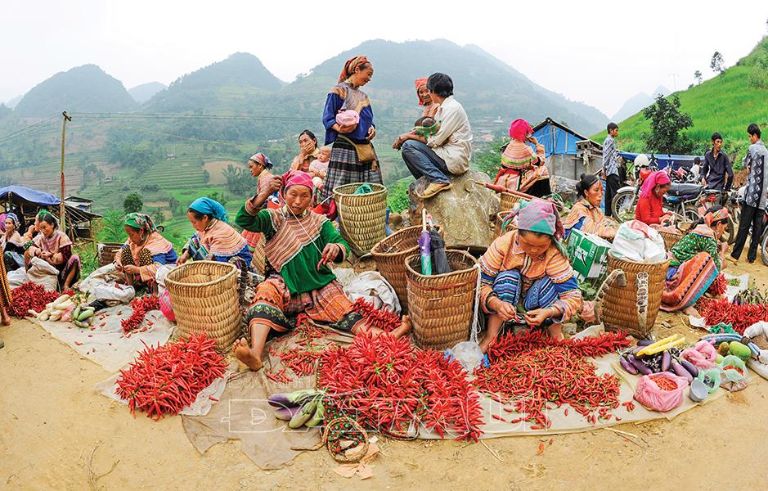
Traditional markets are among the most interesting cultural experiences in Ha Giang. They are not simply places to buy and sell goods, but important meeting points for communities living in remote mountain villages.
From early morning, local people arrive with vegetables, agricultural products, livestock, textiles, handicrafts and other regional goods.
Colourful traditional clothing, busy food stalls and the atmosphere of everyday highland life make these markets very different from conventional tourist attractions.
1. Dong Van Market
Dong Van Market is one of the most accessible traditional markets for travellers exploring the Dong Van Karst Plateau.
The market is usually busiest on Sunday mornings, when people from surrounding villages gather in town to trade goods and meet friends and relatives.
Visitors can find agricultural products, household items, textiles and local food stalls.
Its central location also makes it easy to combine the market with Dong Van Old Quarter before continuing towards Lung Cu or Ma Pi Leng Pass.
Best for: First-time visitors, international travellers and Ha Giang Loop itineraries.
2. Meo Vac Market
Meo Vac Market is another major Sunday market and an important cultural stop on the Ha Giang Loop.
People from villages around the area gather to trade agricultural products, food, household goods and other everyday items.
The market is particularly convenient for travellers combining Meo Vac with Ma Pi Leng Pass and the Nho Que River.
Best for: Highland culture, food and Ha Giang Loop travellers.
3. Lung Phin Market
Lung Phin is known for a traditional rotating market schedule rather than a simple fixed weekday.
The market starts early and brings together residents selling agricultural products, poultry, textiles, household goods and regional products.
Because the schedule follows a traditional cycle, travellers should confirm the actual market day locally before visiting.
Best for: Travellers looking for a more local highland market experience.
4. Sa Phin Market
Sa Phin lies along an important route through the Dong Van area and is also known for the nearby H'Mong King's Palace.
Its market provides an opportunity to experience a smaller and more locally focused trading environment.
Visitors may find agricultural products, food and everyday items brought down from surrounding villages.
Check the local market calendar before travelling, as the schedule does not operate like a conventional daily market.
Best for: Combining with the H'Mong King's Palace, Sung La and Dong Van.
5. Pho Cao Market
Pho Cao is known for traditional earthen houses, stone fences and dramatic limestone surroundings.
On market days, residents from nearby villages gather to trade goods and meet one another.
The attraction is not simply what is for sale, but also the opportunity to observe the rhythm of highland community life.
Best for: Photography, village culture and the route towards Dong Van.
6. Quan Ba Market
Quan Ba is usually one of the first major mountain stops on the classic Ha Giang Loop.
The local market brings together agricultural products, food and everyday goods from communities around the area.
Travellers can combine a market visit with Quan Ba Heaven Gate, the Twin Mountains and nearby community villages.
Best for: Ha Giang Loop itineraries and first-time visitors.
7. Quyet Tien Market
Quyet Tien Market offers another opportunity to experience local trading culture around the Quan Ba area.
The market has a more local atmosphere, with agricultural products, food and household items brought in from nearby communities.
It is a useful alternative for travellers interested in smaller markets rather than only the better-known markets of Dong Van and Meo Vac.
Best for: Local culture and travellers passing through Quan Ba.
8. Hoang Su Phi Market
Hoang Su Phi is famous for terraced rice fields, but its traditional Sunday market is another cultural experience worth adding to a journey through the area.
Local communities gather to sell agricultural products, tea, food and other regional goods.
During the rice season, travellers can combine an early market visit with terraced landscapes and nearby villages.
Best for: Rice terrace trips, trekking and cultural travel.
9. Coc Pai Market – Xin Man Area
Coc Pai Market is one of the notable traditional markets in the western Ha Giang region.
On market days, communities from surrounding mountain areas gather to trade agricultural products, food and everyday goods.
It is especially interesting for travellers looking beyond the classic Ha Giang Loop.
Coc Pai can also be combined with a journey towards the Xin Man area and the Suoi Thau Plateau.
Best for: Slow travel, photography and western Ha Giang itineraries.
10. Khau Vai Love Market
Khau Vai is very different from a regular weekly market. It is a special cultural event traditionally organised on a particular occasion each year.
During the festival period, visitors can experience local food, cultural performances, folk activities and traditions associated with the famous love market.
Always check the official date for the relevant year before planning a trip specifically around Khau Vai.
Best for: Culture, festivals and traditional experiences.
When do Ha Giang markets take place?
There is no single schedule for all traditional markets in Ha Giang. Larger markets such as Dong Van and Meo Vac are associated with Sunday mornings, while several smaller markets follow rotating traditional schedules.
Market dates may also be affected by holidays and local customs, so confirming the schedule with your accommodation or local residents shortly before visiting is recommended.
What time should you visit?
Early morning is usually the most interesting time to experience a traditional market.
This is when residents are arriving from surrounding villages, stalls are fully stocked and the atmosphere is at its liveliest.
Some markets begin to quieten towards late morning or midday, so avoid arriving too late if the market itself is an important part of your itinerary.
What should you experience at a Ha Giang market?
- Try regional food and drinks at local food stalls.
- Explore agricultural products, textiles and handicrafts.
- Observe everyday highland trading and community life.
- Ask permission before taking close-up photographs of residents.
- Carry cash and smaller Vietnamese banknotes.
- Respect local customs and avoid treating the market only as a photo attraction.
Which market is best for first-time visitors?
Dong Van and Meo Vac are the easiest choices for travellers following the classic Ha Giang Loop because both can be combined with major attractions.
For a more local experience, consider Lung Phin, Sa Phin or Pho Cao when their market schedules match your itinerary.
Hoang Su Phi and Coc Pai are better suited to travellers exploring western areas, rice terraces and routes beyond the classic Loop.
Final thoughts
Traditional markets provide one of the best opportunities to experience the cultural life of the Ha Giang highlands.
From the busy markets of Dong Van and Meo Vac to Lung Phin, Sa Phin, Hoang Su Phi and Coc Pai, every market has its own rhythm and character.
If your itinerary allows it, dedicate at least one early morning to a traditional market. It may become one of the most memorable cultural experiences of your Ha Giang journey.

Comments
No comments yet
Overall rating (0)
No approved comments yet.
Write a review