Top 10 Most Scenic Routes in Ha Giang





Discover 10 of the most scenic routes in Ha Giang, from Quan Ba, Yen Minh and Dong Van to Lung Cu, Ma Pi Leng, Meo Vac, Du Gia and the rice terraces of Hoang Su Phi.
- Top 10 Most Scenic Routes in Ha Giang
- 1. Ha Giang – Quan Ba
- 2. Quan Ba – Yen Minh
- 3. Yen Minh – Tham Ma Pass – Sung La – Dong Van
- 4. Dong Van – Lung Cu – Lo Lo Chai
- 5. Dong Van – Ma Pi Leng – Meo Vac
- 6. Meo Vac – Khau Vai
- 7. Meo Vac – Mau Due – Du Gia
- 8. Du Gia – Ha Giang
- 9. Ha Giang – Hoang Su Phi
- 10. Village Roads around Hoang Su Phi
- Which Ha Giang route is the most scenic?
- How many days do you need for the Ha Giang Loop?
- Safety tips for Ha Giang mountain roads
- Final thoughts
Top 10 Most Scenic Routes in Ha Giang
Ha Giang is famous for winding mountain roads, deep valleys, limestone peaks and traditional villages scattered across the northern highlands.
For many travellers, the most memorable part of the journey is not simply reaching an attraction but travelling along the spectacular roads connecting each destination.
Here are 10 scenic routes worth considering when exploring Ha Giang.
1. Ha Giang – Quan Ba
This is often the first mountain section of the classic Ha Giang Loop.
As you leave the central area, the landscape gradually changes into steep mountain scenery. The journey passes areas such as Bac Sum Pass and Quan Ba Heaven Gate before reaching the valley around Quan Ba.
Highlights: Bac Sum Pass, Heaven Gate and Quan Ba Twin Mountains.
2. Quan Ba – Yen Minh
The route from Quan Ba towards Yen Minh passes through valleys, mountain slopes and highland villages.
The scenery becomes increasingly peaceful, with green landscapes and pine-covered areas creating a contrast with the rocky plateau further north.
Highlights: Valleys, pine forests and mountain scenery.
3. Yen Minh – Tham Ma Pass – Sung La – Dong Van
This is one of the most scenic sections on the journey towards Dong Van.
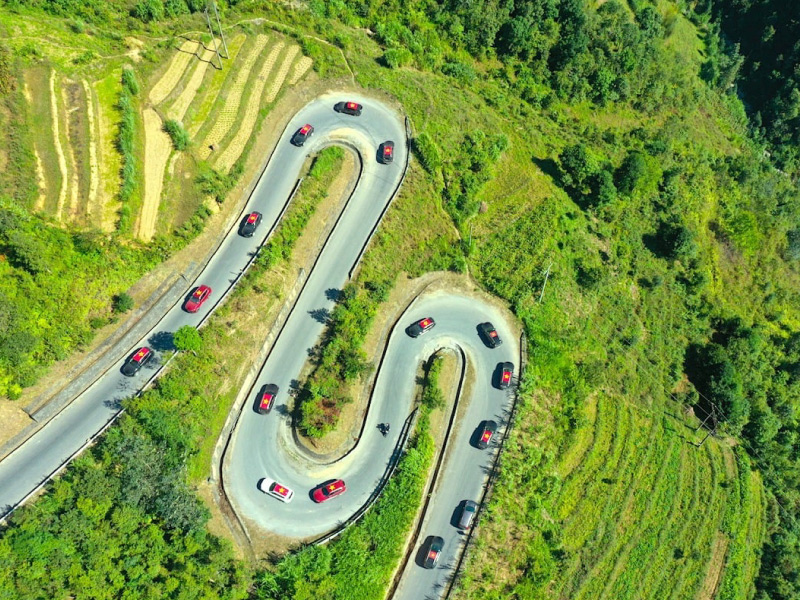
Tham Ma Pass is famous for its winding bends, while the route continues through areas such as Sung La and Sa Phin before reaching Dong Van.
Allow plenty of time for viewpoints and photography along this section.
Highlights: Tham Ma Pass, Sung La, Sa Phin and the karst plateau.
4. Dong Van – Lung Cu – Lo Lo Chai
The route from Dong Van towards Lung Cu provides a beautiful journey through the northernmost landscapes of Ha Giang.
Limestone mountains, small valleys and traditional villages create a distinctive frontier atmosphere.
Travellers can combine Lung Cu Flag Tower with a visit to Lo Lo Chai Village.
Highlights: Lung Cu, Lo Lo Chai and traditional villages.
5. Dong Van – Ma Pi Leng – Meo Vac
This is one of the most famous road sections in Ha Giang.
The road follows steep mountain slopes with dramatic views into deep valleys and towards the Nho Que River below.
Ma Pi Leng Pass is the main highlight, offering some of the most impressive scenery on the Ha Giang Loop.
Highlights: Ma Pi Leng Pass, Nho Que River and Tu San Canyon.
6. Meo Vac – Khau Vai
Leaving Meo Vac towards Khau Vai takes travellers through quieter mountain scenery and traditional villages.
Compared with the famous Dong Van – Meo Vac section, this route can feel slower and more closely connected with rural life.
Highlights: Mountain villages, valleys and local culture.
7. Meo Vac – Mau Due – Du Gia
This scenic section is popular with travellers who continue around the Ha Giang Loop rather than returning along the same road.
The scenery gradually changes from rocky mountains to greener valleys, fields and remote villages.
Road conditions can vary, so travellers should check current conditions before departing.
Highlights: Mau Due, mountain valleys and Du Gia.
8. Du Gia – Ha Giang
The return from Du Gia offers a gentler landscape of green mountains, farmland, streams and small villages.
It is often the final stage of a multi-day Ha Giang Loop journey.
Starting early gives travellers more time for scenic stops and helps avoid riding mountain roads after dark.
Highlights: Du Gia, countryside and peaceful valleys.
9. Ha Giang – Hoang Su Phi
For travellers looking beyond the classic Dong Van Plateau route, the road towards Hoang Su Phi offers a very different side of Ha Giang.
The area is known for mountains and extensive terraced rice fields carved into the slopes.
The scenery is particularly attractive during the water season and rice season.
Highlights: Rice terraces, mountain landscapes and villages.
10. Village Roads around Hoang Su Phi
From Hoang Su Phi, smaller roads lead towards remote villages and spectacular terraced landscapes.
These areas are better suited to slow travel, trekking and landscape photography than a rushed road trip.
Highlights: Rice terraces, trekking and remote villages.
Which Ha Giang route is the most scenic?
For first-time visitors, the Dong Van – Ma Pi Leng – Meo Vac route is one of the strongest choices because it combines dramatic limestone mountains, high passes and views towards the Nho Que River.
For greener valleys and rural villages, the route towards Du Gia offers a different atmosphere.
Hoang Su Phi is particularly attractive for travellers interested in rice terraces, trekking and landscape photography.
How many days do you need for the Ha Giang Loop?
A three-day itinerary can cover the main route, although sightseeing time will be relatively limited.
Four days generally provides a more comfortable pace for Quan Ba, Yen Minh, Dong Van, Lung Cu, Ma Pi Leng, Meo Vac and Du Gia.
Travellers who also want to explore Hoang Su Phi or spend additional time in villages should consider extending their trip.
Safety tips for Ha Giang mountain roads
- Check weather and road conditions before each stage.
- Avoid riding mountain roads after dark.
- Reduce speed on steep descents and blind corners.
- Never stop in the middle of the road for photographs.
- Refuel before longer and more remote sections.
- If you lack mountain riding experience, consider travelling with an experienced driver.
Final thoughts
Much of Ha Giang's beauty lies along the roads connecting Quan Ba, Yen Minh, Dong Van, Lung Cu, Meo Vac, Du Gia and Hoang Su Phi.
Rather than focusing only on individual attractions, allow enough time to enjoy the journey itself. Mountain passes, valleys and villages along the road often become some of the most memorable parts of travelling through Ha Giang.

Comments
No comments yet
Overall rating (0)
No approved comments yet.
Write a review