Ha Giang in Summer – Weather, Places to Visit & Travel Tips
Discover Ha Giang in summer from June to August, with green mountain scenery around Dong Van, Lung Cu, Ma Pi Leng and Du Gia, plus rainy-season travel tips.
- When Is Summer in Ha Giang?
- 1. Quan Ba – Green Valleys at the Start of the Loop
- 2. Yen Minh – Green Mountain Roads
- 3. Dong Van – Summer on the Karst Plateau
- 4. Lung Cu – Villages & Green Highland Scenery
- 5. Ma Pi Leng Pass – Mountain Views after Rain
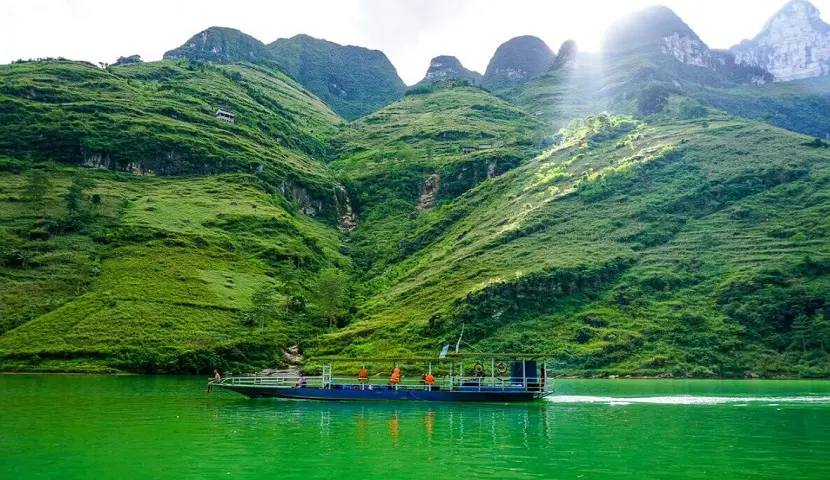
- 6. Nho Que River – Summer between the Mountains
- 7. Du Gia – A Green Highland Retreat
- 8. Hoang Su Phi – Green Rice Terraces
- Does It Rain a Lot in Ha Giang During Summer?
- What to Pack for Ha Giang in Summer
- Mountain-Road Safety during the Rainy Season
- Suggested 3-Day Summer Ha Giang Loop
- Is June a Good Time to Visit Ha Giang?
- What about July and August?
- FAQ – Ha Giang in Summer
Ha Giang in summer offers lush green mountains, rice fields and vibrant valleys across the northern highlands.
It is a very different experience from the golden rice and buckwheat flower seasons, but summer also requires more attention to rainfall and mountain-road conditions.
When Is Summer in Ha Giang?
Summer generally runs from June to August.
During this period, forests, valleys and rice fields become increasingly green. However, rainfall can also be more frequent, so travelers should check weather and road conditions regularly.
1. Quan Ba – Green Valleys at the Start of the Loop
Quan Ba is one of the first major stops on many Ha Giang Loop itineraries.
During summer, the valleys and surrounding mountains become particularly green.
Travelers can combine the scenery with Quan Ba Twin Mountains and viewpoints along the route.
2. Yen Minh – Green Mountain Roads
Yen Minh lies on the route between Quan Ba and Dong Van.
Summer vegetation creates lush mountain scenery, particularly after periods of rain.
3. Dong Van – Summer on the Karst Plateau
Dong Van remains an important stop throughout the year.
In summer, green fields and vegetation create a striking contrast with the gray limestone mountains.
In the evening, visitors can explore Dong Van Old Quarter, enjoy local food and rest before continuing the journey.
4. Lung Cu – Villages & Green Highland Scenery
Lung Cu offers green mountain and rural scenery during the summer months.
Travelers can combine Lung Cu Flagpole and Lo Lo Chai Village in the same day.
5. Ma Pi Leng Pass – Mountain Views after Rain
Ma Pi Leng Pass remains one of the highlights of the Ha Giang Loop.
On clear days after rain, mountain scenery and the valley below can appear particularly vivid.
However, heavy rain and fog can significantly reduce visibility, so safety should always take priority over completing a planned itinerary.
6. Nho Que River – Summer between the Mountains
Nho Que River can be combined with Ma Pi Leng Pass and Meo Vac.
When weather and local services allow, travelers can take a boat trip and experience Tu San Canyon from river level.
7. Du Gia – A Green Highland Retreat
Du Gia is particularly attractive in summer thanks to its green valleys, farmland and quiet village atmosphere.
It is suitable for travelers who want to stay at a homestay, walk through the village and enjoy a slower part of the Ha Giang Loop.
8. Hoang Su Phi – Green Rice Terraces
Between the water-pouring and harvest seasons, Hoang Su Phi rice terraces gradually turn bright green.
This makes summer suitable for travelers who enjoy terraced landscapes but are not visiting during the golden harvest season.
Does It Rain a Lot in Ha Giang During Summer?
Summer can bring heavier or more frequent rainfall.
Travelers should check conditions for individual areas such as Dong Van, Meo Vac, Quan Ba and Du Gia rather than relying only on a general regional forecast.
What to Pack for Ha Giang in Summer
- Rain protection: lightweight but suitable for mountain travel
- Shoes with good grip: useful on wet paths
- Light jacket: useful during cooler mornings and evenings
- Sunscreen: important on clear days
- Power bank: useful for navigation and photography
- Waterproof bag: protects documents and electronics
Mountain-Road Safety during the Rainy Season
- Check weather conditions before each stage
- Do not continue through heavy rain or extremely poor visibility
- Reduce speed on wet roads
- Avoid sudden braking in corners
- Avoid unnecessary night riding
- Do not stop on blind corners or unsafe roadside sections
- Follow local warnings during prolonged bad weather
Suggested 3-Day Summer Ha Giang Loop
- Day 1: Quan Ba – Yen Minh – Tham Ma Pass – Dong Van
- Day 2: Sa Phin – Lung Cu – Lo Lo Chai – Dong Van
- Day 3: Ma Pi Leng Pass – Nho Que River – Meo Vac
With 4 days and 3 nights, travelers can add Du Gia and leave more flexibility for changing weather conditions.
Is June a Good Time to Visit Ha Giang?
June can be suitable for travelers who enjoy lush green landscapes.
In some terrace areas, the scenery also begins transitioning from the water-pouring season into green rice fields.
What about July and August?
July and August can still offer beautiful landscapes, but travelers should pay closer attention to rainfall.
If prolonged heavy rain is forecast, adjusting the route or travel dates may be safer than trying to maintain the original itinerary.

Comments
No comments yet
Overall rating (0)
No approved comments yet.
Write a review